Naloxone Patient Profile
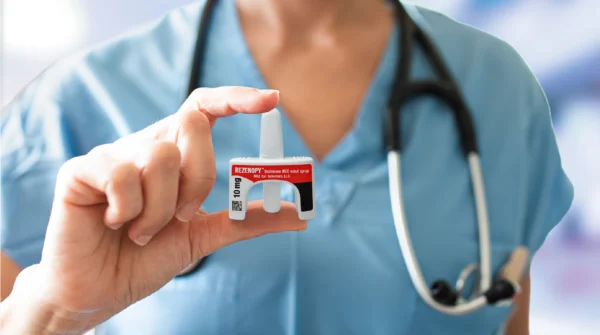
Addressable REZENOPY™ Patient Population
The U.S. Centers for Disease Control and Prevention (CDC), Food and Drug Administration (FDA), and other health organizations recommend that anyone at an increased risk for opioid overdose, or their friends and family, should carry it.1
Below, you’ll find an evidence-based “patient profile” for individuals who should carry naloxone (like REZENOPY™) to reverse potential opioid overdoses.
Qualifying Patients & Their Care Circle
Clinicians are advised to consider prescribing naloxone for patients who meet one or more of the following criteria:1
- High-Dose Opioid Prescriptions: Patients taking 50 milligram morphine equivalents (MME) per day or greater.
- Concurrent Benzodiazepine Use: Patients prescribed both opioids and benzodiazepines (e.g., Xanax, Valium, Ativan) or other central nervous system depressants.
- Opioid Use Disorder (OUD): Any history of OUD or active substance use disorder.
- Previous Overdose: Individuals who have experienced a previous opioid overdose.
- Reduced Opioid Tolerance: Individuals recently released from incarceration, detox, or rehabilitation, as their tolerance for opioids has dropped, making them high-risk for fatal overdose.
- Illegal Substance Use: People who use illicit opioids, such as heroin or illicitly manufactured fentanyl, or who use other drugs that may be contaminated with fentanyl (e.g., cocaine or methamphetamine), should have naloxone available.
Naloxone should also be available in the household, even if the person at risk does not carry it, for:
- Family and Friends: People who live with someone taking high-dose opioids.
- Caregivers: Anyone surrounding people in the high-risk groups mentioned above.

Actor portrayal, not actual patient
Only 1 naloxone prescription is dispensed for every 70 high-dose opioid prescriptions. As a healthcare professional, you play a critical role in ensuring patients receive naloxone.3
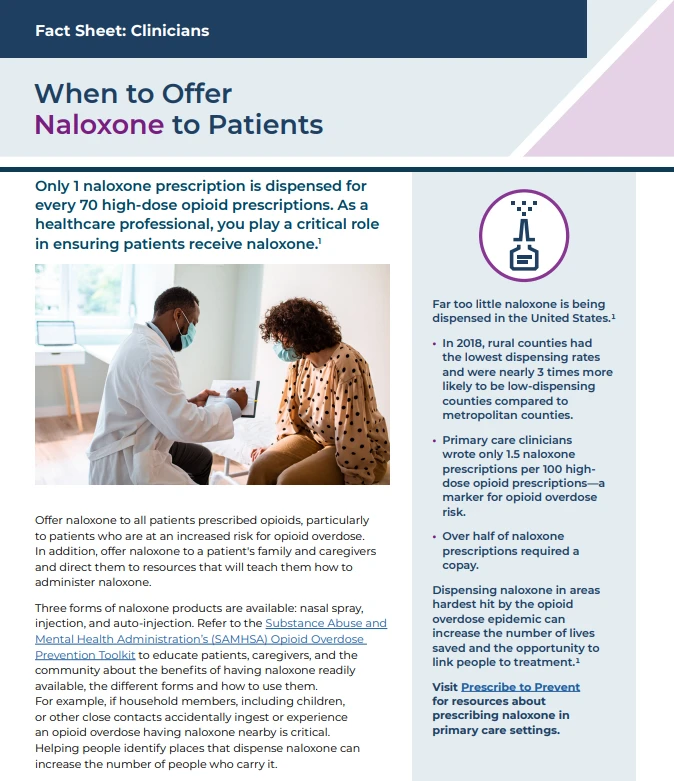
When to Offer REZENOPY Naloxone to Patients
Consider prescribing naloxone to those at increased risk of opioid overdose
The FDA recommends health care professionals discuss naloxone with all patients when prescribing opioid pain relievers or medicines to treat opioid use disorder.¹
Helpful Information
References
- Lifesaving naloxone. Centers for Disease Control and Prevention website. Available at: https://www.cdc.gov/stop-overdose/caring/naloxone.html. Updated June 2025. Accessed March 2026.
- FDA recommends health care professionals discuss naloxone with all patients when prescribing opioid pain relievers or medicines to treat opioid use disorder. U.S. Food and Drug Administration website. Available at: https://www.fda.gov/drugs/drug-safety-and-availability/fda-recommends-health-care-professionals-discuss-naloxone-all-patients-when-prescribing-opioid-pain. July 23, 2020. Accessed March 2026.
- Vital Signs: Life-Saving Naloxone from Pharmacies. Centers for Disease Control and Prevention website. Available at: https://www.cdc.gov/vitalsigns/naloxone/index.html. August 2019. Accessed March 2026.
