

The Maximum-Dose Naloxone Solution for Your Formulary
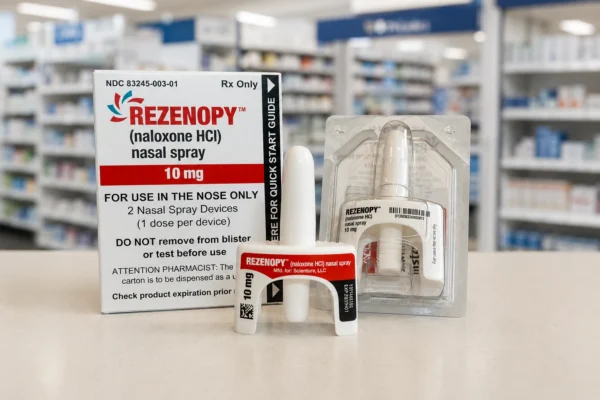
In today’s fentanyl-driven overdose landscape, healthcare systems need formulary options that match the potency of emerging threats. REZENOPY™ delivers 10 mg naloxone per nasal spray—the highest FDA-approved concentration available1*—providing your facilities with a maximum-strength emergency response tool designed for straightforward implementation.
*The clinical significance of a higher dose is currently unknown.
Higher-Dose Naloxone: Considerations for Healthcare Systems
The opioid crisis has fundamentally changed since 2013. Synthetic opioids like fentanyl now drive the majority of overdose deaths, with fentanyl-related fatalities increasing 23-fold between 2013 and 2023.2 Fentanyl is 50 to 100 times more potent than morphine,3 creating distinct challenges for emergency response that standard-dose naloxone may not adequately address.
The Scale of the Challenge
Opioid Use Disorder | Treatment
4.8 million people aged 12 or older
had an opioid use disorder in the past year
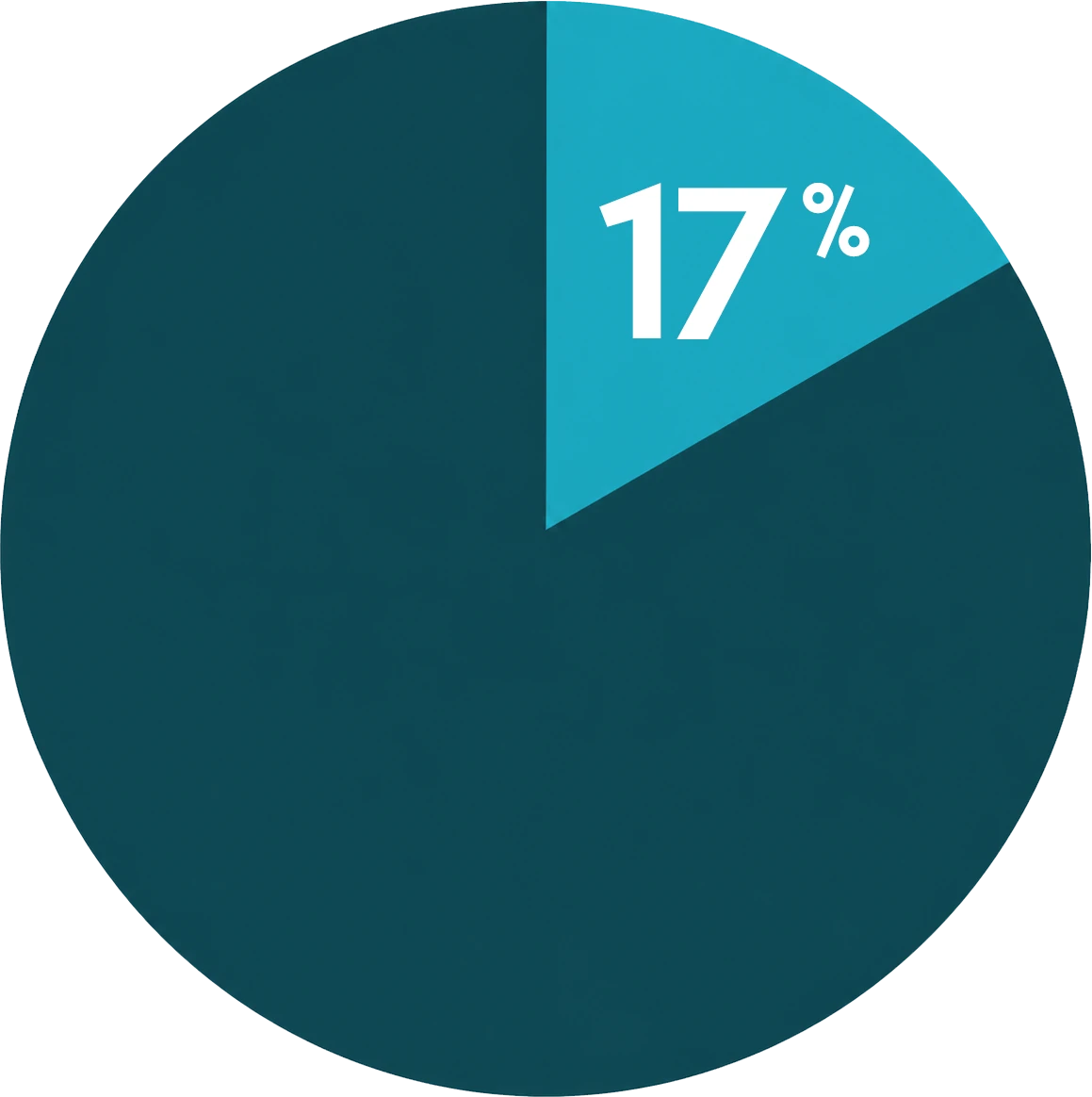
17.0%
Received medications for
opioid use disorder (MOUD)
NSDUH 2024 | samhsa.gov/data/nsduh
These overdoses are driven by synthetic opioids such as illegally made fentanyl (IMF) and other potent synthetic analogues, including carfentanil, estimated to be 100 to 10,000 times more potent than morphine.4
What the Evidence Shows
Multiple doses increasingly required:
Real-world studies suggest the occurrence of multiple naloxone administrations (MNA) among bystanders and EMS providers continues to increase. A growing percentage of emergency department patients require multiple naloxone administrations, highlighting the need to monitor this trend and the ongoing adequacy of current treatment options for managing opioid intoxication.6,7,8
Rapid receptor occupancy:
Fentanyl differs from traditional opioids with very rapid onset and high systemic levels found in overdose victims, requiring rapid competition by naloxone to out-compete the large number of opioid receptors occupied by fentanyl in the CNS.9
Higher doses recommended:
Studies indicate that higher doses of naloxone are needed to combat overdoses involving potent synthetic opioids like fentanyl, with some cases requiring a second standard-strength dose or a high-strength naloxone formulation.7,8,9
According to research published in Substance Abuse Treatment, Prevention, and Policy:9
“In the current opioid epidemic, the risk of inadequate reversal of the opioid toxicity far exceeds the risk of over antagonizing the respiratory depression and precipitating opioid withdrawal syndrome.”
How REZENOPY Addresses These Challenges
High-dose REZENOPY may improve the chances of reversing potent opioids quickly and reducing the requirement of multiple naloxone administrations compared to lower doses of naloxone. In the face of increasingly potent synthetic opioids, healthcare providers and emergency responders need tools that match the evolving crisis. REZENOPY delivers 10 mg of naloxone HCl in a single intranasal dose—offering the highest available concentration1 when reversing respiratory depression could mean the difference between life and loss.
Expanding Your Naloxone Toolkit
REZENOPY is designed as a formulary addition—not a replacement—providing healthcare facilities with maximum-strength naloxone for situations involving potent synthetic opioids. In the context of increasingly challenging overdose presentations, higher-dose naloxone may offer a more robust first-line option as compared to lower-dose naloxone, particularly in settings where administration by laypersons or first responders occurs prior to the arrival of advanced medical care.
Explore REZENOPY resources by your role:
REZENOPY 10 mg gives healthcare systems, first responders, and communities access to the maximum FDA-approved nasal spray dose—expanding the naloxone toolkit to address today’s most challenging overdose scenarios.
Pharmacy Directors and Decision Makers
Make an Informed Formulary Decision
Access comprehensive formulary materials including clinical evidence, comparative efficacy data, and economic considerations for adding REZENOPY 10 mg to your naloxone protocols.
- Formulary kit
- REZENOPY Prescribing Information
- REZENOPY Product Profile
- Wholesaler and NDC details

Hospital Pharmacists & Procurement Teams
Streamlined Ordering & Sourcing
Find everything you need to add REZENOPY to your inventory through your existing purchasing channels.
- REZENOPY Product Profile
- Authorized wholesaler information
- GPO pricing and contract details
- Formulary kit
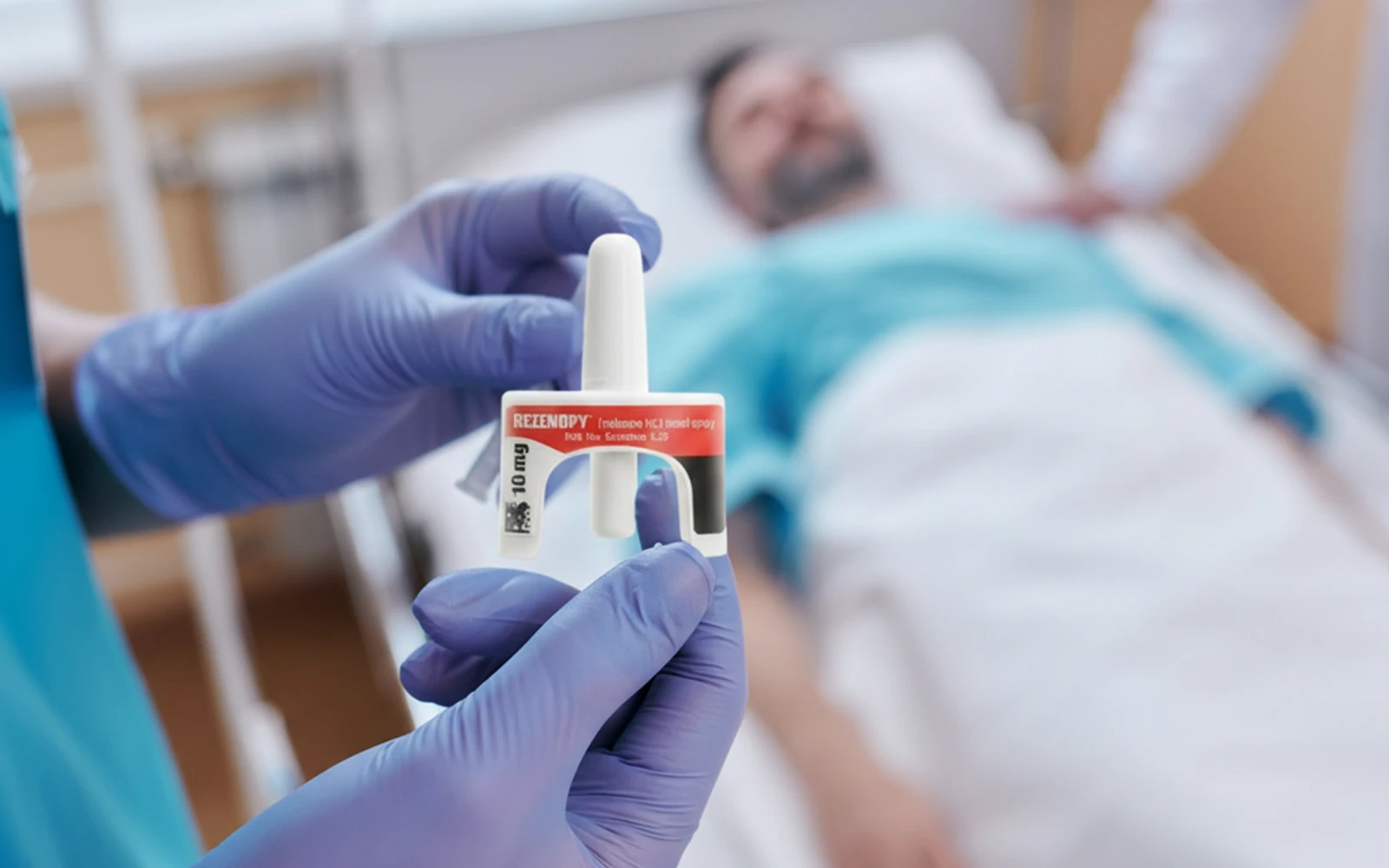
Emergency Department & Clinical Staff
Implementation & Training Support
REZENOPY 10 mg is designed for rapid deployment in critical situations. Access protocols and training materials to support implementation.
- REZENOPY Quick Start Guide
- Opioid Overdose: WHO Facts
- CDC Opioid Overdose Prevention
- Patient education materials

First Responders & EMS
Maximum-Dose Protection in the Field
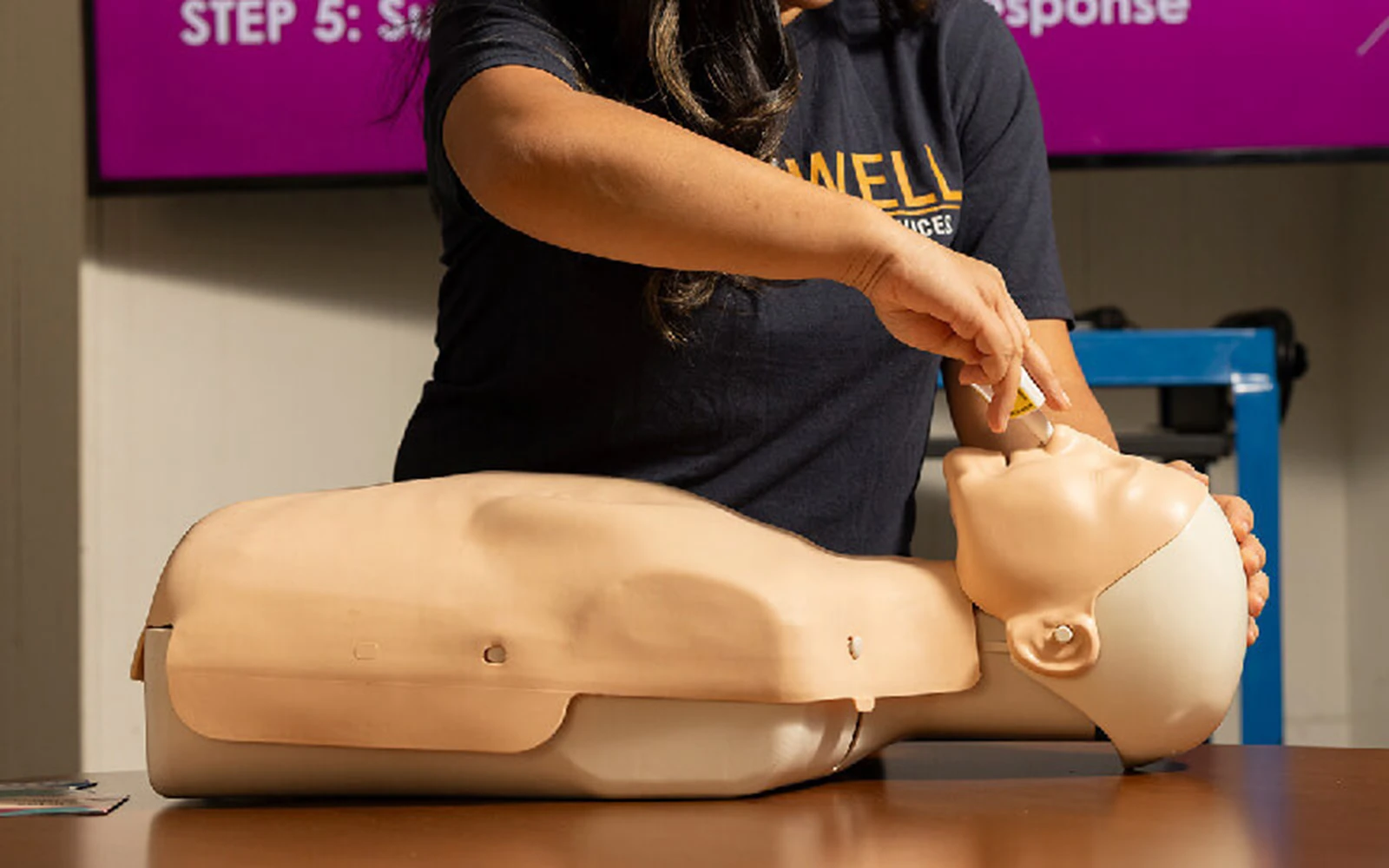
REZENOPY 10 mg delivers the highest FDA-approved naloxone dose in a nasal spray format designed for rapid deployment when facing potent opioid threats.
State Health Departments & Public Health Programs
Program Support & Bulk Procurement
REZENOPY 10 mg provides state agencies and harm reduction programs with the highest-strength naloxone nasal spray option for community distribution initiatives.
- Bulk ordering and procurement support
- GPO pricing and contract details
- Apexus 340B Prime Vendor Program details
- Implementation resources
References
- REZENOPY™ (naloxone HCl) nasal spray 10 mg [prescribing information]. Commack, NY; Scienture, LLC 2025.
- Are fentanyl overdose deaths rising in the US?, USAFacts website. Available at: https://usafacts.org/articles/are-fentanyl-overdose-deaths-rising-in-the-us. Accessed March 2026.
- Fentanyl (2025) National Institute on Drug Abuse website. Available at: https://nida.nih.gov/research-topics/fentanyl. Accessed: March 2026.
- Substance Abuse and Mental Health Services Administration. (2025). Key substance use and mental health indicators in the United States: Results from the 2024 National Survey on Drug Use and Health. HHS Publication No. PEP25-07-007, NSDUH Series H-60.
- Drug Overdose Data (Vital Statistics Rapid Release). Centers for Disease Control and Prevention, National Center for Health Statistics website. Available at: https://www.cdc.gov/nchs/nvss/drug-overdose-data.htm. Accessed March 2026
- Rzasa Lynn R, Galinkin JL, McClain M, Alfieri T. Use of multiple naloxone administrations in the emergency department: A retrospective claims-based analysis. Journal of Emergency Medicine. 2025;79:111–122. Available at: https://jem-journal.com/retrieve/pii/S0736467925001696. Accessed March, 2026.
- Abdelal R, et al. Real-world study of multiple naloxone administration for opioid overdose reversal among bystanders. Harm Reduction Journal. 2022;19:49. Available at: https://pmc.ncbi.nlm.nih.gov/articles/PMC9122081/. Accessed March 2026.
- Abdelal R, et al. The need for multiple naloxone administrations for opioid overdose reversals: A review of the literature. Substance Abuse. 2022;43(1). Available at: https://pubmed.ncbi.nlm.nih.gov/35112993. Accessed March 2026.
- Moss RB, Carlo DJ. Higher doses of naloxone are needed in the synthetic opioid era. Substance Abuse Treatment, Prevention, and Policy. 2019;14:6. Available at: https://doi.org/10.1186/s13011-019-0195-4. Accessed March 2026.
